This Blog features articles spanning 45 years of Interpretive work in botanical gardens, museums, international travel, environmental education and natural resource management with a focus on plant diversity conservation.
Wednesday, June 22, 2022
New Smithsonian Associates Sunrise Hikes at Great Falls
Monday, June 20, 2022
Everglades Trip January 2022.
Soon the area changed character entirely. Now we paddled largely open expanses of water, perhaps a mile across in some locations. A group of Roseate Spoonbills passed overhead, their spatula like bill plainly visible. Further in the distance brown pelicans seemed to fly in formation, their mammoth bills pointing keenly forward. They looked like an avian dinosaur. A few years later in an ornithology class, I learned Pelicans were indeed very primitive birds. A taxonomic oddity, sometimes called a living fossil. In a few locations we spied Anhingas, a sleek bird and skilled swimmer who’s neck protruded discreetly above the water, almost snake-like. Found mainly in Florida, the Anhingas were entirely exotic to us. Like Cormorants, Anhingas often roost in trees drying their long attenuated wings. On close inspection their emerald-like green iris nearly glows.
By late afternoon we arrived at our backcountry Chickee. Essentially a deck large enough to set up your tent and stay the night. We set up in absolute silence as the sun faded in the west. It’s one of the most unique camping experiences in the United States. A Barred Owl could be heard in the distance as we secured the tent zipper in anticipation of copious mosquitoes. The level, flat deck made for good sleeping unlike a sloping mountain side studded with rocks we were accustomed to. Morning came quickly as we got organized to cook breakfast. Suddenly a loud wholly unfamiliar sound boomed from outside our tent. Sort of a deep sucking sound. We dashed out to see a dolphin swim by chasing fish around the chickee. It circled back toward us and surfaced exposing its blowhole while taking a deep, rapid breath. Clearly winded, it took off across our intimate lagoon. It’s path clear as small silvery fish frantically jumped out of the water to evade being eaten.
Saturday, February 12, 2022
Botanical Gardens of the World with the Smithsonian Associates
Join us February13th- we’ll be visiting Betty Ford Alpine Garden in Vail, Colorado and the Western Australian Botanic Garden in Perth Australia. Program begins at 4PM EST. www.smithsonianassociates.org.
Friday, October 15, 2021
Smithsonian Associates Programs

New Program Schedule with the Smithsonian Associates
New National Park Series
December 12th-
The Everglades and Beyond; Florida's Natural Treasures
Yosemite and the Range of Light
𐩘𐩘𐩘𐩘
New Botanical Garden Programs
February-13th- Betty Ford Alpine Garden & Western Australia Botanic Garden
20th- Shanghai & Huntsville Botanical Gardens
27th- Inisfree Garden & Fairchild Botanical Garden
𐩘𐩘𐩘𐩘
Shenandoah Natural History Weekend
May 15th & 16 2022

Sunday, February 21, 2021
Friday, January 29, 2021
Cheekwood Estate and Gardens-A Nashville Treasure
The center piece is the Cheekwood mansion situated atop a prominent hill with
sweeping views of the garden and distant hills. Built between 1929 and 1932,
its a traditional Georgian mansion with 50 rooms spread among four floors. The
exterior is made largely of limestone blocks cut from local quarries. The
original house included stables and a multiple-car garage. In fact, the family
traveled to England specifically to study 18th-Century Georgian architecture
and furnishings. Leslie and Mable Cheek's fortune was earned in several
business ventures, most prominently in association with Maxwell House Coffee.
The mansion is now the primary museum for Cheekwood’s permanent and traveling
exhibits. Room after room is perfectly arranged into specific, intimate
galleries. Combined with the exceptional architecture, it's a nationally unique
museum experience oozing curatorial excellence. Spring 2016 featured the
remarkably diverse work of Steve Tobin. A Philadelphia based mathematician and
artist, Tobin's work ranges in material and subject matter. With ceramics,
wood, glass and even a Lantern House made from archival film slides, Tobin's
work is mystical and mesmerizing all at once. Some ceramics are intentionally
exploded to create something akin to a giant earth star mushroom with a deep, colorful
glass center. Illumination often plays a central role in Tobin's glass work.
Outside several of Tobin's monumental sculptures tower among the trees like
giant spiders.
Departing the Mansion one is quickly reminded there's an entire Garden to
explore. Huge hackberry trees dot the landscape displaying their unique knobby
bark. Intimate creeks and
Other Cheekwood highlights include the Martin Boxwood Garden appropriately
situated near the Mansion. Nearby the Herb Study Garden and the lovely Burr
Terrace Garden occupy a sloping hillside interspersed with many large specimen
trees. At the bottom of the slope the Howe Garden features beautiful stone
masonry walls, entrance ways and a pond. Above the Howe Garden is the First
Learning Center with more galleries and classrooms.
There's an air of southern grace at Cheekwood. One could imagine an ornate garden party or traditional Chatelain among the splendid landscape. Indeed, Cheekwood hosts events large and small including a holiday light show. Between art exhibits, classes, social events and tours there’s something special going on all year. Many gardens around the world feature monumental sculpture outside and in conservatoires.
Tuesday, January 26, 2021
Los Angeles County Arboretum and Botanical Garden: A Horticultural Hot Spot in the City of Angels
Our pace quickens as we enter the arboretum. Superintendent Tim Phillips knows it will be a busy day, entrance fees are waived the first Tuesday of each month and there’s a film crew waiting to get started. As we walk onto the Bauer Lawn I'm taken with the grand view of the San Gabriel Mountains towering to the north framed by a lush horticopia of trees from around the world. Tim casually mentions that this part of California can grow more types of plants than almost anywhere in the world. The Mediterranean climate is nearly perfect. Rarely a freeze, sunny days and cool nights...with irrigation almost anything is possible. That's a pretty big deal for an arboretum and botanical garden.
Among several unique Aloes the tall narrow stick-like trunks of the Madagascar Ocotillo reach for the sun. It has a stunning similarity to the native Ocotillo but is totally unrelated belonging to an entire plant family found only in Madagascar. The tiny thick leaves radiate in perfect rows like miniature solar panels. In a gravelly bed nearby the Madagascan Rosy Periwinkle blooms with characteristic brilliance. A common landscape plant throughout North America, it’s also the source of Vincristine and Vinblastine two of the most effective drugs for fighting childhood leukemia among other cancers.
From the BGT Team-more info at www.arboretum.org
Saturday, January 23, 2021
The Gardens of Schönbrunn Palace
Vienna Austria is a truly refined city. A bit like Washington DC with low building profiles, copious museums and beautifully manicured public parks. But the jewel in the crown is Schönbrunn Palace. For pure grandeur it has few equals in the world.
The Missouri Botanical Garden-Beyond Exceptional
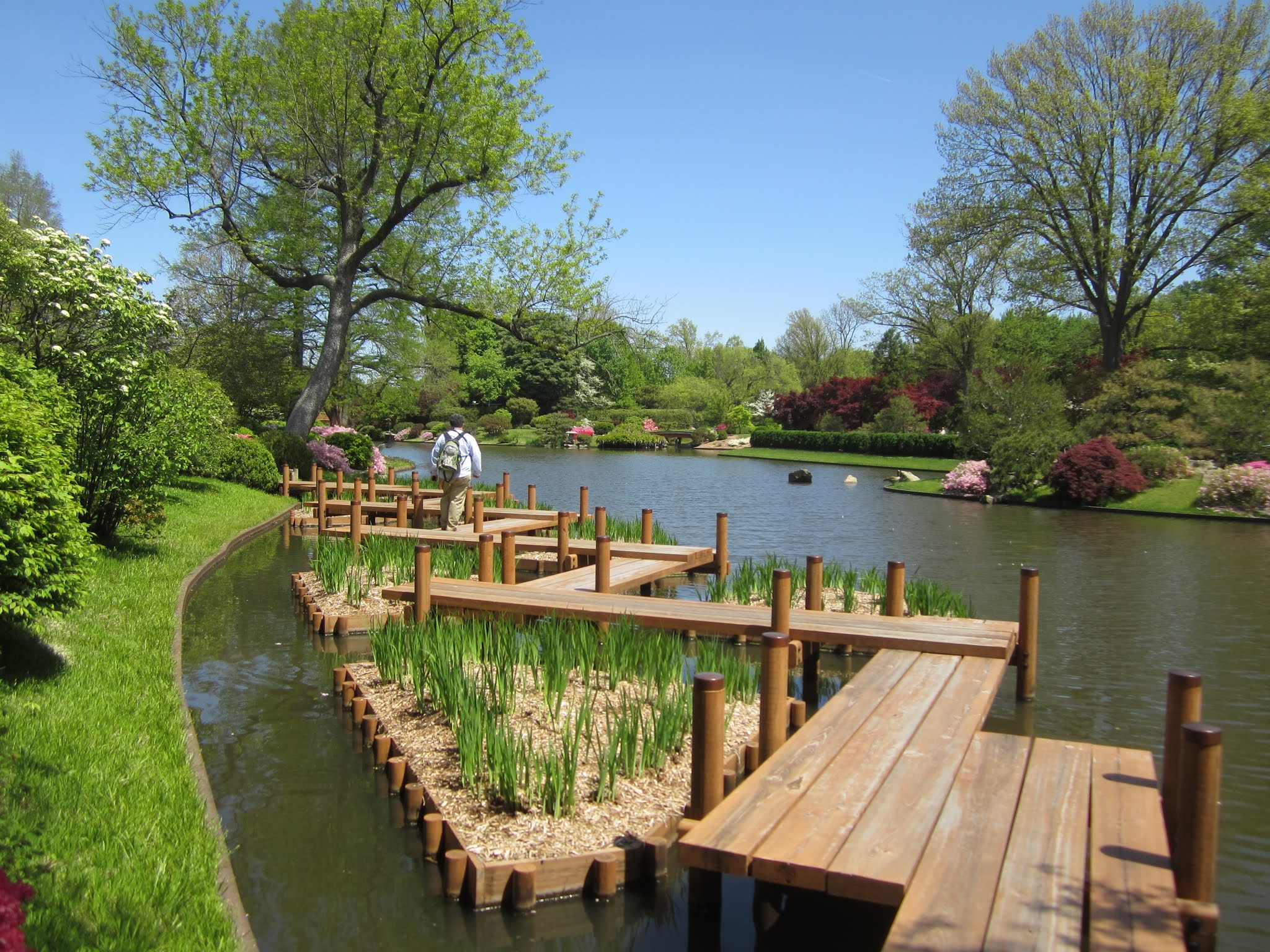
To anyone who works in a botanical garden there are a handful of institutions that clearly rank at the very top. If it were cars, we’re talking Maserati, Rolls Royce or Ferrari. Like the car, the gardens combine many aesthetic and performance qualities that are renowned industry wide. In the case of gardens this normally includes exceptional horticulture programs on a historic site and a major research department with global influence. In addition, these gardens have extensive education programs that reach everyone from kindergarteners to advanced graduate students. Generally three gardens come to mind: The New York Botanical Garden in the Bronx, The Royal Botanic Gardens at Kew north of London and The Missouri Botanical Garden.
Friday, January 22, 2021
The Palm Garten: Frankfurt’s Grand Botanical Garden
At the entrance an important horticultural display is found. Several windmill palms are planted in
front of the gate house. These are said to be the most cold-tolerant palms in the world. I
remember seeing them in Wuhan China
where winter can be fairly cold. However,
I’ll never forget stumbling upon a large
specimen in a Eugene, Oregon school yard.
It was during a very cold and snowy winter
storm. The broad fan-shaped fronds stood
upright as if it was a sunny subtropical day.
Since then plant breeders have created new
varieties for cold tolerance. These trees
appeared to be planted permanently.
Windmill palms are known to grow in
North America too. Gardens by the Bay Singapore
Opened in 2012 on 250 acres Gardens by the Bay is administered by the Singapore National Parks Board. It was envisioned by Prime Minister Lee Haines Loong as part of the “City in a Garden” concept. Fifty million people visited in the first five years of operation. A notable accomplishment for any public garden.
Part city park, sculpture garden, botanical garden and waterfront oasis Gardens by the Bay feels big and grand at every turn. That’s simply because it is. Several canals bisect the site creating many lovely bridges and walkways leading to shops, restaurants, intimate courtyards and vast tropical landscapes.No visit to Gardens by the Bay is complete without taking-in the Super Trees, especially at night. The built “trees” form a grove of arboreal sculpture unique in the world. Massive trunks covered entirely in staged plants sweep up toward the tree crown as it spans out in silvery dendritic tendrils. Several of the trees are connected by a spacious canopy walkway with commanding views of the entire space. Each evening the trees come to life as a high-tech light show set to classical and modern music. Young and old visitors alike are mesmerized by the thirty-minute show.
The combination of stunning equatorial horticulture with the conservatories, Super Trees, sculptures and other amenities makes Gardens by the Bay the attraction in Singapore. Not too far away from the bay is the UNESCO World Heritage site Singapore Botanical Garden, notable for a huge orchid collection and research facilities. Further afield is the Jerong Bird Park with one of the world’s largest aviaries. Singapore is a remarkable little nation-state with four officially languages and what may well be the world’s greatest horticultural attraction in Gardens by the Bay.From the BGT Team- More info at- www.gardensbythebay.com
Thursday, January 21, 2021
Kirstenbosch National Botanic Garden, Cape Town South Africa
For public garden professionals and enthusiasts one name always rings a bell. Perhaps it’s the world’s most beautiful garden in one of the most spectacular settings on earth. It’s located in the South African Cape Floristic Province, one of the most species rich areas anywhere. Moreover, most of the plants are endemic, found only in this South African, Mediterranean climate biome. Add the dramatic sandstone mountains along a rugged coast, it can only be one place- Kirstenbosch. For nature lovers and botanical garden travelers its a must-see garden.
Kirstenbosch is managed by the South African Biodiversity Institute or SANBI. A world-renowned institution that works to conserve the globally unique biota across South Africa. In many ways Kirstenbosch is the jewel in the crown. A center for education, research, outreach, aesthetics and carefully curated open space. Walking into the garden one is instantly consumed with the proximity of Table Mountain. The grayish-sliver crags covered with shrubbery rise above the neatly organized plant collections. Its a bit like visiting The Royal Botanic Gardens at Kew if it were in Yosemite. The magnitude of this place is all consuming.The entrance area and gardens are immediately inviting. A largely open-air conservatory houses a number of botanical curiosities and an interesting Bonsai collection. Signage is careful to explain that you are in an endemic kingdom where weather, geology and evolution have come together to create one of the world’s greatest botanical treasures. Only a handful of areas on earth have a similar amount of endemic plants. These include the Hawaiian Archipelago, the island of New Caledonia, the Canary Islands, Southwest Australia, Madagascar and a few areas of Papua-Asia.
Further along the Fynbros Garden delights with a number of endemic species. Proteas are cultivated in a large area near the mountains base. This remarkable and ancient plant family is found mainly in South Africa and South West Australia plus a few other locations. Their floral structure is unmistakable, pincushion-like in many colors. A diversity of Erica species occupies their own garden nearby.
A center piece of Kirstenbosch is the ethnobotany garden. For many years’ gardens overlooked the important contributions of native peoples to the expanding knowledge of global plant diversity. The collection and importation of new exotic species to European conservatories was paramount. Not until the mid-twentieth century did western botanist begin to realize the extensive knowledge of native peoples and the plants they used in daily life. In Africa native knowledge of plants for food, shelter, medicine and clothing is as vast as the continent. SANBI recognizes this wealth of indigenous knowledge with an outstanding display at Kirstenbosch that interprets many useful pants and includes a traditional rondaval house.
Collectively Kirstenbosch harbors every asset a world class botanical garden has. Behind the scenes there is a robust research program, large herbarium and innovative conservation initiatives. In addition, Kirstenbosch is just one of several “conservation gardens” under the SANBI umbrella. Together these facilities (including a zoo) conserve and interpret the remarkable South African environment as whole. Sustainability at every level is an overarching theme.
As a public garden Kirstenbosch is a model of conservation and education in a truly exceptional location. Signage, accessibility and a broad offering of public programs entertains and enlightens citizens and tourist alike. Horticultural displays and curatorial excellence abound throughout the garden.Wednesday, August 12, 2020
New Plant Conservation Initiative at Meadowlark Botanical Gardens, USA: The Potomac Valley Collection
Biogeographic Features of the Potomac Valley
The Potomac Valley encompasses 37,824 square kilometers between 38’ and 40’ north latitude and 80’ and 76’ longitude. The watersheds main course flows west to east for 640 kilometers. Twenty major tributaries add another 1,100 kilometers of waterways. The largest of these include the Shenandoah, Monocacy, Cacapon, and Conococheague rivers. Smaller tributaries, mainly in the mountains, combine to make-up 4,300 kilometers of stream corridors. About fifty percent of the watershed is forested.
In global terms, the area falls within Takhtajan’s North American Atlantic Floristic Region. The Potomac River traverses five physiographic provinces west to east; these include Allegheny Highlands, Ridge and Valley, Blue Ridge, Piedmont and the Coastal Plain. Each of these regions contains unique plant communities. In some cases, these communities enjoy broad protection in national and state parks. In other areas, plant communities are under siege from urban sprawl, grazing and logging. Takhtajan recognizes almost one hundred taxa as “endemic or nearly endemic” to the North American Atlantic Floristic Region. Many of these taxa are illustrative of the Potomac Valley flora and comprise an important part of our current accession activity.
The Appalachian highlands of the Potomac Valley reach 1200 meters. Red spruce and northern hardwood forest occupy this region. Several northerly taxa reach their southern limit in the Appalachian Highlands. Within the Ridge and Valley Province, plant communities called shale-barrens support many unique species. Among these are the endemic Phlox buckleyi, Trifolium virginicum and Senecio antennariifolius, to name a few. Further east, in the broad Shenandoah Valley, limestone outcrops support many calcareous cliff-dwelling species. Ferns are of particular interest in this area. One of our region’s most unique small shrubs, Cliff Green (Paxistima canbyi), is also at home on these limestone formations.
The eastern portion of the Potomac Valley lies within the foothill-like Piedmont and the alluvial Atlantic Coastal Plain. Vast deciduous forests of white oak, red oak, red maple, American beech and rock oak embrace a diversity of shade-loving lower-canopy trees, shrubs, wildflowers and ferns. Bald cypress trees grow here, very near their natural northern limit. Some areas of the eastern Piedmont and the Coastal Plain are widely developed. The need for conservation of native plant communities in this area is immediate.
No flora for the Potomac Valley currently exist, however, within the four states of which the Potomac Valley is a part, three—including Pennsylvania, West Virginia and Maryland—have floras. Virginia has no systematic treatment of its flora yet, but it does have a very useful flora atlas. We use these four resources, along with topographic maps, geographic information systems and fieldwork to determine species composition and distribution within the watershed. In addition, we consult with various private and government agencies working to conserve plant diversity in all four states. This exchange enables increased communication on both exsitu and insitu conservation projects. Through this process, we are developing new detailed information on the composition, distribution and conservation status of the Potomac Valley plants. Ultimately, we intend to develop a database for this information.
The display and interpretation of native species is a central goal of the collection. The collection will provide our staff with the ongoing task of understanding conservation needs of native species throughout the Potomac Valley and interpreting that information to the public through education programs. We will continue to add accessions in accordance with various strategies outlined in the International Agenda for Botanic Gardens in Conservation and the Darwin Technical Manual both publications of Botanic Gardens Conservation International.
From a programmatic perspective, the Potomac Valley collection is the foundation of our institutional mission centered on aesthetics, conservation, education and community service. Moreover, this collection’s development supports Meadowlark’s parent agency, the Northern Virginia Regional Park Authority, in conserving and cataloging native species on its own properties, all 4,583 hectares of which are in the Potomac Valley.
Objectives for the Potomac Valley Native Plant Collection
- Strengthen the existing collection within the fiscal, administrative and curatorial practices of the garden.
- Foster an understanding of the aesthetic and ecological value of native plants within the community.
- Develop and implement educational programs that focus on native plant horticulture and conservation.
- Provide conceptual framework for the public to foster awareness for regional plant conservation with issues such as water quality and ecosystem/habitat conservation.
- Facilitate a temporal understanding about the Potomac Valley plant communities by interpreting their natural history.
- Raise public awareness about obtaining native plants and discourage wild collecting.
- Encourage insitu and exsitu conservation projects throughout the Potomac Valley.
- Work in partnership with local universities, museums and other gardens to encourage systematic, ecologic and biogeographic research on Potomac flora.
- Establish curatorial and horticultural internship programs working with the Collection.
- Illustrate the effects of exotic invasive species on native plant communities.
- Propagate stock plants for reintroduction into the wild when deemed appropriate.
- Rescue plants from construction sites and other disturbed areas when all viable conservation alternatives are exhausted.
- Research and assemble criteria to evaluate the collection’s impact as a vehicle for conservation and education.