Thursday, March 12, 2026

Smithsonian Associates Celebrate 60 years of Museum Based Education


Smithsonian Associates just celebrated their 60th anniversary. Widely recognized as the largest museum education program in the world, they had a lovely exhibit for the anniversary in the S. Dillon Ripley center on the National Mall.

The exhibit featured speakers, photographs and highlights from 60 years of museum based informal education programming. The expansive nature of the offerings has always amazed me- from Nobel laureates to famous scientists, art critics, curators, historians, university professors, world renowned chefs and even a few local natural history interpreters.

I was surprised to find a photograph from one of our Shenandoah National Park programs prominently featured. I’m thrilled and flattered to be included in this remarkable group of informal and formal educators from around the world. Since in 1999 I have led local study tours to Shenandoah National Park, the West Virginia Highlands, Tangier Island, Great Fall Virginia plus several local gardens and parks. In 2020 founded Botanical Gardens of the World. In 2023 I founded Natural History Road Trips, both popular programs on Zoom. 

India, The Maldives and Ausrtia


Twenty Twenty-five closed with a remarkable trip to India attending a lavish wedding in New Delhi, spanning three celebratory days. We realized early on this trip would offer a few other important opportunities. Thus, the Maldives were added to the itinerary.  Passing through Europe on the way home it just made sense to stop in Vienna Austria. One of my favorite cities.

Arriving in New Delhi after a long flight from New York, we departed for the Himalayan foothills and Jim Corbett National Park in the state of Uttarakhand. This is a well-known location for observing Bengal tigers in the wild, something I had hoped to do since my earliest days working as a naturalist. I have always loved domestic cats and felines in general, the notion of seeing this grand animal in habitat was deeply intriguing.

As is often the case, Carolyn did some research and we knew exactly where we were going to stay and what our itinerary would be. Not surprisingly this involved a hair-raising 6 hour drive through urban New Delhi and on into the rural areas north of the city.

We visited India in the summer of 1988. That was during a two year trip around the world. It's fair to say that that journey changed us both forever. It allowed us to see many places we knew very little about and to appreciate the fact we had grown up as children of moderate privilege in America. Ultimately this long journey molded us into the people we are today. This experience revealed so much of the worlds struggles and yet keeps driving forward endowed by remarkable culture, languages, cuisine and geography. The sense of discovery on that trip is rarely equaled.

Staying at the lovely Paatlidun eco tourist lodge in the park was exciting from the very beginning. We were lucky having the opportunity to work with one of the senior naturalists on staff, Imran Khan. He was a retired banker and technology worker who decided that the call of nature was simply far more important in his life- he pivoted and became an interpretive naturalist. He recognized that we were people used to observing the natural world in its infinite diversity. Within a short time, we saw 20 native birds that we had never seen before. As well as 2 primates. Imran was clearly focused on making sure we would in fact see a tiger.

The National Park falls within the Paleotropical Indian Region as defined in Arman Takhtajan’s seminal work, Floristic Regions of the World. The regional forest occurs in a narrow band of Subtropical montane and temperate broad leaf vegetation. The Deema range peaks reach 4000 ft, they are incised by numerous steep streams and river valleys. Common tree species include Rohini (Mallotus Phililpinensis), Bhimal (Grewia optiva), Amla (Phyllanthus embelica), Kamimi (Murraya paniculata), Mango (Mangifera indica), Golden Shower (Cassia fistula), Meeta Neem (Murraya koehgii), Fig (Ficus racemosa) among others.

The geomorphic setting of the park is a remarkable illustration of fluvial dynamism at the base of the Himalaya foothills. Most of our time was spent along the Ramganga River draining the heavily forested, steep hillsides. Vast gravel and sandbars braided widely across the river course. This depositional environment could change with a single robust rainstorm. It seemed the co-alluvial bedload could spread and deposit in infinite intertwining patterns at will.  The finer sand banks cast near-perfect Tiger tracks.

After an active day in the field near an unstable gravel bank, sure enough not one but two tigers appeared, an adult male and female. The male appeared from behind a low, dense hedge not far from the rivers raging rapids. His large sleek body slipped out over a loose cobble embankment in a series of careful steps toward an adjacent stream. He may have been 50 yards away. For a moment we stood in absolute awe knowing this extraordinary apex predator was wandering around our observation site. Imran was thrilled, as were we.

Following the grand three day wedding replete with sumptuous feasts, street dancing, noble white horses, endless flowers and an extraordinarily beautiful couple we quietly departed for the Maldives- exhausted.

Flying through drifting equatorial cloud banks with towering stratocumulus clouds dotting the horizon we landed in Male'. Making our way to a boat taxi, a rainstorm of monsoon caliber soaked us completely. It was about 85°. Entirely soaked, we clambered onto our boat taxi bobbing in the waves and headed south through the Wadu Channel. Arriving at Maa Fushi, we spent the next several days exploring the local culture. Walking to our hotel from the dock across the island, perhaps three or four hundred meters away, we negotiated floodwaters throughout the streets- often above the knee. To me this was an Anthropocene moment simply witnessing the potential of sea level rise and surge.

These coral atolls barely emerging above the deep blue Indian Ocean seemed to go on forever with hundreds of different islands. We chose to stay at a modest local hotel hoping to avoid the super-rich resorts that dot the country. It was a good decision, we were able to mix with the local culture, stroll about the island and snorkel with some local guides.

The Maldives claim the mantle of the world’s only entirely Muslim nation. Indeed, all the women are neatly clad in headscarf’s while the men sport casual T-shirts, feet bare and toes splayed wide by a lifetime without shoes. Like most humans in the Indian Subcontinent, Maldivians are Caucasoid people. Yet they are near ebony in complexion. A more beautiful people I’ve rarely seen. An assortment of fresh fish was abundant at the local eateries, along with vegetables likely imported from Sri Lanka. There was absolutely no beer or wine, but ample non-alcoholic brews that were quite flavorful.

Our stay included a half-day snorkeling adventure with a boat full of jovial Europeans. We encountered no other Americans. The local crew were delightful in their enthusiasm and knowledge of the reef biota. All men who clearly had a deep connection to shimmering seas and atolls. Numerous colorful reef fish, sea turtles and dolphins were seen. I found some of the swimming challenging, but Carolyn, a spirited, powerful swimmer was in the water at every opportunity.

Our final night was spent back in Male' to afford an easy flight connection the next morning. The city occupies the entire atoll. Only a few parks and athletic fields provide open space. It’s a truly unique and crowded environment, often cited as the world’s densest city.  Buildings are architecturally clever, gleaning as much use out of restricted space as possible. Our hotel was one such example, every space no matter how small, was used efficiently. We visited the bustling fish and produce market, each brimming with remarkable biodiversity and the requisite banter of traders in action.


After our stay we took a long flight transiting Istanbul briefly and flying into Vienna Austria. We spent time in Istanbul a few years earlier.  Just the kind of cultural and geographic change that we so enjoy. I was intent on staying in a lovely local hotel visited four years earlier. The next five days were filled with delicious Austrian food, exquisite pastries, outstanding beer and visiting numerous museums. The small but fascinating globe museum was perhaps my favorite spot. Vienna lives up to its reputation as notably civilized, easy to get around and accommodating. It embodies the very best of a European capital.

Saturday, April 12, 2025

American Horticultural Society Trip to Morocco 2023


Keith P. Tomlinson, American Gardener Magazine, American Horticultural Society, Spring 2024


The sweeping view from Grand Villa de France hinted at the week to come. Tangier unfolds toward the Mediterranean, the bustling spice market, colonial forts and numerous exquisite gardens beckon. A sense of exploration filled the conversation during our first dinner together, thirteen AHS travelers ready to explore private and public gardens in one of Africa’s most intriguing countries. Date Palms, Birds of Paradise and huge Philodendrons waved in the breeze in the fading sun as the call to prayer rang out at the local mosque. 


Tangier is the gateway for many travelers to Morocco. Steeped in visitors who came and simply stayed. Their homes and gardens tended in the perfect Mediterranean climate flourished. Not just collections of plants, but artifacts, books and art. Among the most fascinating place’s we visited is the home of Italian Writer and Horticulturist Umberto Pasti. Situated on a steep hill above town, the garden features plants from similar climates around the world. Intimate courtyard gardens embrace each building decorated with whale vertebrae and Roman sculptures mixed with traditional Islamic art. 


Later in the day we visited Donabo for lunch, a lovely public garden perched on a high cliff over the Atlantic. A tour with the Director revealed developing collections suited to the inquiring gardener as well as visiting school groups. Donabo embodies the larger vibe in Morocco, a place of hope and progress steeped in a culture unique in the world. 


We headed south toward the ancient city of Fez situated among sandstone cliffs outlining a shallow valley. A five-minute walk in narrow passages past laboring donkeys led us to the Riad Fez, an exquisite hotel hidden among the city’s red clay ramparts. The stunning three-story lobby is decorated in impossibly detailed, colorful ceramics. A traditional dinner of Couscous and Lamb was followed by drinks on the rooftop terrace with an expansive view of the city. The next day we visited a busy local garden park as a singing troop entertained delighted children playing among fragrant gardenias and linear fountains. Fez is a center for the arts, Berber carpets, fine leather goods and intricate ceramics of the highest quality abound. 


A night in the Capital Rabat allowed for a leisurely dinner and conversation at the beautifully appointed Hassan Palace. Sporting a brand-new skyscraper, Rabat is a city of neatly tended garden parks. Surely among North Africa’s most beautiful cities, it’s a place of celebration and admiration for King Mohammed VI. The next morning, we explored Jardin Exotic just south of town. A forest garden with an impressive aviary, the garden manager and curator provided an intimate tour that tested our various plant identification apps. Both aesthetic and educational, Jardin Exotic fills and important horticultural and botanical niche near the capital city. 


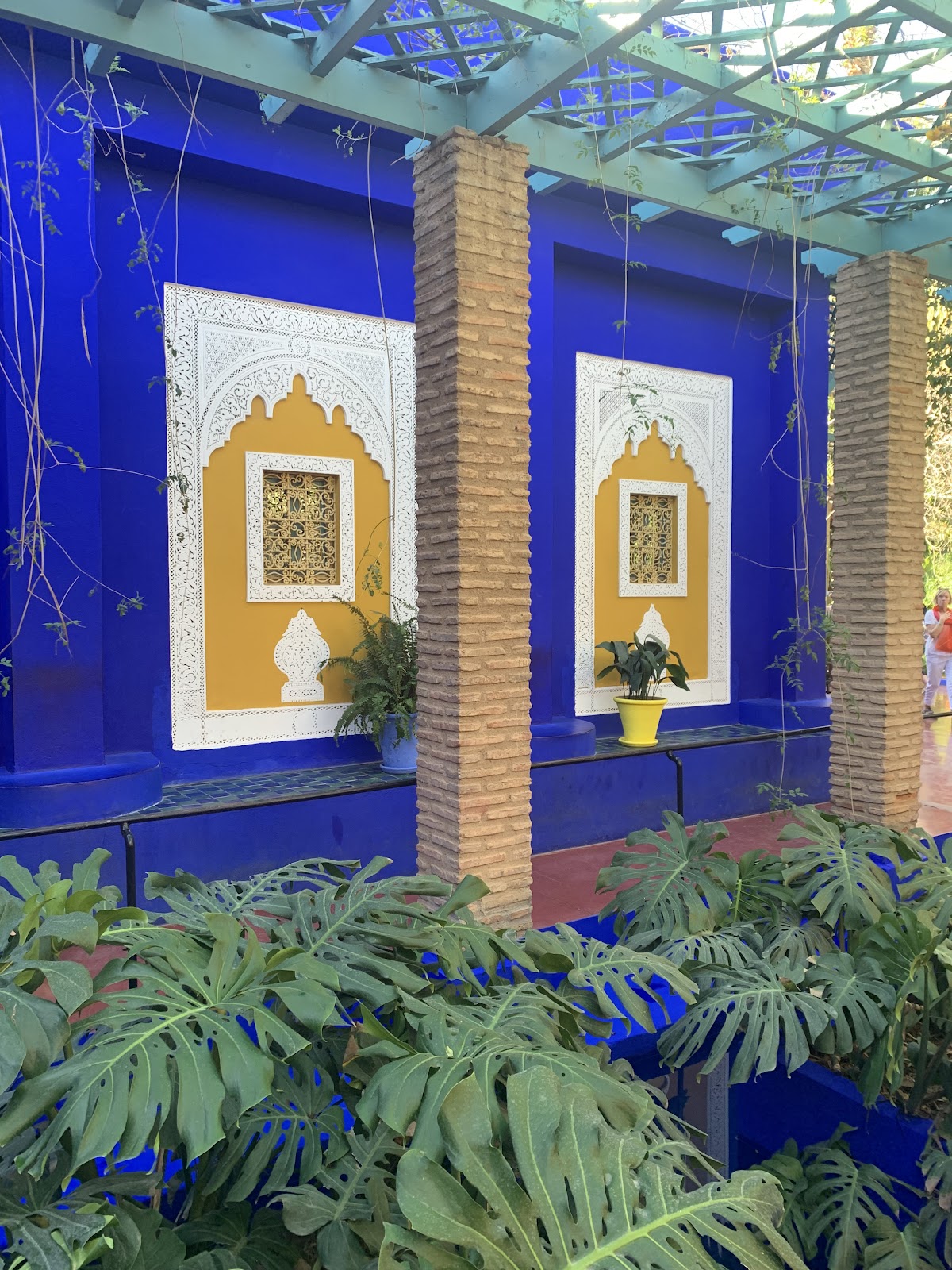
We arrived in Marrakech, perhaps the world’s most famous market city as an enthralling sunset cast an orange glow on snow-capped peaks of the High Atlas. Our final two days featured adventures in the famous Jemaa el-fnaa market, Jardin Majorelle and a visit to the exquisite Le Jardin Secret. Our last evening celebrated the music, wine and antiquity of Marrakech as we marveled at the gardens visited, design inspiration and horticultural treasures of Morocco.  


Friday, April 11, 2025

Closing the Busiest Interpretive Season Since Retiring from Full Time Work


Twenty twenty-four was the busiest year for programming since retirement in July of 2020. January included year three of Botanical Garden’s of the World with Smithsonian Associates. This Zoom series has attracted thousands of attendees from around the world. While I’m the founder and principal host, several excellent guest speakers were included. Shortly afterwards the Keynote presentation at the Prince William Wildflower Society required considerable preparation. While content rich it also needed to be consumable for a diverse audience ranging from natural resource professionals, horticulturist and home gardeners. Details of the talk are found on this 
Blog. A few garden club presentations followed. Brookside Gardens in Wheaton Regional Park hosts the Silver Spring Garden club. This is always an excellent meeting venue with a good turnout and excellent follow-up questions. 

Returning to the Potomac Valley Collection 

Perhaps the central event of spring 2024 was being invited back to work at Meadowlark part time. This was specifically to coordinate new focused work on the native plant collections. During the Pandemic the entire garden suffered a dramatic decline. This was common in public gardens around the country, especially those with a small staff. I didn’t visit much as I found it distressing to see a once remarkable space going without enough care. I was particularly heartbroken that the Potomac Valley native plant collection (PVC) had fallen into complete disrepair. The once uniquely beautiful, biologically diverse space was being overrun by invasive weeds. Dead branches littered the ground the trail faint, as English Ivy, Privet and Japanese Honeysuckle covered delicately created plantings. The development of the PVC was my primary contribution to Meadowlark over more than two decades. Thousands of hours of labor, international recognition, nearly a million dollars in donations, multiple journal articles, even a feature in the New York Times science section seemed wasted. It was painful to see. Yet I understood that botanical garden collections change over time, often reflecting the interest of new staff. But the PVC was a foundational collection designed specifically to diversify Meadowlarks’ mission and appeal by creating a distinct botanical horticulture focus to the garden. It did just that, providing a conservation initiative that the public and donors recognized. 

I was able to recruit several excellent volunteers in March 2024. Many of these folks are Virginia Master Naturalist and prolific native plant gardeners. With this highly skilled crew we set out on extensive weeding and pruning projects. Very little training was needed, just setting priorities. As May dawned, we could see the substantial progress as many previously planted species poked through the warming soil. It didn’t look good enough for public tours yet, but aesthetic and ecological elements of the collection were reemerging. This was wonderfully satisfying for all involved. We also spent some time working around the Lake Lena native wetland. It's important to note the entire garden is looking much better, there are several talented new staff making thoughtful contributions. In early May I had to depart for two months of Volunteering in North Cascades National Park. Along with some additional staff support, the volunteers continued making great progress. I returned on Schedule in August.

Potomac Overlook Nature Center

Work at Potomac Overlook also picked up during the Spring season. I spent time supporting various staff priorities and hosting birthday party nature programs. While working at Potomac Overlook in the 1990s, I generally avoided birthday programming having specialized in high schools, university students, adults and seniors. But nearly thirty years later, I find these programs to be curiously appealing. Around 2015 I began giving children’s tours at Meadowlark on an experimental basis. Instead of delving into content focus topics related to plant biodiversity and conservation, I told stories. Little did I realize just how much I enjoyed these tours. It was a complete turnaround for me as an interpreter. One memorable tour a little girl slipped her hand into mine as we walked along a flower lined trail. That was a first, and it moved me. I was baffled at the newfound attraction after decades of adult work. My frequent collaborator, photographer and retired diplomat Bill Folsom knew exactly what was happening. During a conversation one afternoon, he explained with characteristic certainty that I was now old enough to be a grandfather, thus the opportunity to spend time with children was a predictable outcome. Bill was one of the wisest people I ever had the privilege to work with. I continue to greatly enjoy doing kids birthday parties at Potomac Overlook. 

North Cascades National Park (NOCA)


The trip west included tornado dodging in the mid-West, a stop by Canyon de Chelly, a fascinating visit to Hoover Dam, superb wildflower botanizing in Death Valley and excellent camping at Lake Tahoe. The final leg featured parts of northeastern California I’d never seen including Lassen Volcanic National Park and the snowy slopes of Mt. Shasta’s looming stratovolcano summit. Further north in Oregon I visited with daughter Charlotte and had a great tour of Smith Rocks replete with intricate spires and sawtooth summits. 

 Arriving in North Cascades I jumped immediately into a week of training, meeting new staff and friends from last year. Consistent with the maritime climate, cold, overcast, wet conditions lasted until late May- when the sun came out as if on cue. I was pleased to find the largely female led management team still in place. A group of stellar women committed to public service and conservation in one of the countries most rugged national parks. As expected, the Management staff combined with many seasonal rangers made for a great work environment. Numerous new coworkers brought fascinating backstories and broad experience in NPS parks from the Everglades to the Grand Canyon, Shenandoah and Glacier in addition to several smaller historic sites. My entire time this summer was working in the lovely visitor center at the heart of public service, my favorite duty. 

While nearly forty years old, the NOCA visitor center exhibits are engaging and full of educational content. Like most visitor centers, maps play a central role, nothing more than the raised-relief topographic map anchoring the lobby. Measuring 6x10 feat and inlaid with interactive lights highlighting numerous park features, this map is typical of high quality NPS exhibits. It’s detailed, technically accurate, yet hand painted. This single exhibit might take months to fabricate and cost well over $100,000. It was an absolute privilege to work in this setting. I also spent time at the Pickett Range overlook not far from the visitor center. Clouds often obscure the view, but when it’s clear the range displays magnificent relief with steep snow fields, glaciers and several needle-like peaks made up largely of Cascade Gneiss. The aptly named Mt. Terror has a few alpine climbing routes noted for their exposure and occasionally unstable rock.

To an east coast naturalist, the forests of the Pacific Northwest are legendary and mystical. Towering trees, copious moss and high seasonal rain fall results in a forest of remarkable stature and beauty. Unlike most of the eastern forests many areas are old age or genuine old growth. Thus, huge trees are relatively common. Predictably there are numerous relatives between the eastern and western forests. Many common genera are recognizable but yield different species, presumably denoting ancestral commonality in the preglacial forest of the mid-Tertiary Miocene. In addition, there are the ever-curious East Asian affinities on both the east and west coasts further suggestion intercontinental commonalities in pre-Pleistocene forests. 

The existence of a vast, complex circumboreal Miocene Forest is well known. Macro fossils in particular reveal a forest where ginkgo's, oaks, dawn redwood, tree of heaven, bald cypress, numerous magnolias and tulip poplars mingled. First coined the Arcto-Tertiary (ACT) flora in 1879, this concept seemed to address the remarkable disjunctions of many closely related species. It gained broad acceptance over the next 100 years in the fields of paleobotany and biogeography. However, recent studies utilizing molecular techniques paint a more complex picture of migration and speciation among Eastern North America and East Asia in combination with climatic oscillations. These evolving relationships provide a fascinating backdrop to the floristic complexity of both regions and their closely allied species. 

While the forests of the Pacific Northwest are remarkable in stature and composition, the forests of the east and southeast are somewhat more complex and species rich. Both can trace their composition to ancient floral assemblages regardless of intricacies in composition and distribution. Thus, a visit to ecoregions in either biome reveal a remarkable past and fascinating present. Regardless of modern impacts, these forests will continue to evolve, diversify and migrate on time scales beyond human agency. 

After an uncharacteristically fast trip back east, I started work again at Meadowlark and Potomac Overlook in addition to volunteering in the Sculpture Garden at the National Gallery of Art and the World War II Memorial. The Smithsonian Associates Shenandoah National Park program took place on October 19th and 20th. Fall colors were peaking and clear weather made for a wonderful weekend. The sold-out trip comprised a group of able hikers. Our initial hike followed several trails around Big Meadows including a stop at the excellent visitor center. The Saturday evening lecture on the park’s natural history went well, generating many insightful questions. Day two we tackled the Dark Hollow Falls trail, at times steep and circuitous, the fall colors were particularly brilliant. I found the hike a bit arduous, as did several participants. As fall faded, I assisted with a management transition in the Merrifield Garden Centers tropical greenhouse. It was a pleasure to work with several talented staff in this beautiful commercial space during robust holiday visitation. Ever since living in Florida and Hawaii in addition to traveling in many equatorial forest regions, tropical plants have held particular fascination for me. 

Sunday, May 12, 2024

Smithsonian Associates Shenandoah National Park, October 20th and 21st

I’ll be returning to Shenandoah National Park leading the Smithsonian associates tour on Sunday and Monday, October 20 and 21st. We’ll be there for the height of the fall color change and stay at the historic Big Meadows Lodge. Two moderate 3 to 4 mile hikes will touch on flora, wildlife, geology, climate and local natural history. 

Interpretive highlights include:

-Land assignment statement and a brief review of Paleo, Archaic and Woodland Indian habitation of the mid-Atlantic 

-Evolution of the Appalachian Mountains and Shenandoah in particular

-Regional ancient volcanism as related to modern topography

-Differing geologic features including Greenstone, Old Rag Granite and Sandstones found south of our location

-Glacial Effects on the regions native biota and corresponding post glacial northward migration of forest communities from southern refugia 

-Modern forest composition of Oak-Hickory woodlands and the demise of American Chestnut trees

-Survey of Common Native Wildflowers and Birds

-Native mammals of the park with an emphasis on bear life-history and human interactions

- Current conservation issues and invasive species with a focus plants


Cross Country May 2024


I’m currently driving from Washington DC to North Cascades National Park on the Canadian border in Washington state. This is my second summer volunteering for the national park service. Last week I started the journey at Seneca Rocks West Virginia, after providing a natural history program for the rock climbing guides at the Seneca Rocks climbing school. After more than a week of travel I’ll reach my summer volunteer assignment. Driving through the Midwest I was careful to avoid areas experiencing recent tornadoes. Once further West, I was able visit Death Valley, Canyon de Chelly, the Mt. Whitney region and Mt. Shasta. 

I’ve passed through 20 different eco-regions from east to west. Happy to report that the Sierras and Death Valley look good after a season of late snowfall and even some rain. This is in addition to the hurricane that passed over Death Valley last year. The floral diversity at the mid elevations of Death Valley is remarkable with many herbaceous angiosperms and full bloom. I also had the opportunity to visit the absolutely stunning Lake Tahoe for the second time. A lake of this magnitude in such a location is nearly unparalleled in the world. The backdrop of the northern Sierras to the west of the lake makes for a fascinating and beautiful place to visit. Onto Bend, Oregon to visit with family and visit the notable volcanic Tuff formations at Smith Rock State Park.


Sunday, February 18, 2024

Keynote Address for the 6th Annual Prince William Wildflower Symposium February 10th, 2024: Topic Review


On Saturday February 11th I delivered the keynote talk at the Prince William Wildflower Society 6th Annual Symposium. This was an honor and great opportunity to discuss one of my favorite subjects about mixing garden aesthetics with a further understanding of landscape ecology. Many vocational gardeners, even relatively sophisticated native plant gardeners, don't have a grasp of landscape ecology as a basic tenant of supporting conservation in the garden and in the wild.

Reflecting my own interest, I discussed the origins of our native plants from preglacial Tertiary Forest distribution, Pleistocene glaciation and postglacial forest migration from southern refugia in peninsular Florida and southeastern North America. Through this approach I hope to enhance the general knowledge of native plant gardeners and encourage them to consider a holistic approach to the landscape through the increased understanding of paleoecology and modern landscape ecology.


Landscape ecology is the science of studying and improving relationships between ecological processes in the environment and particular ecosystems. This is done within a variety of landscape scales including biogeography, ecoregions, historical geology, climate and continually emerging conservation issues.

Concisely, landscape ecology can be described as the science of landscape diversity as the synergetic result of biodiversity and geodiversity.


In addition, I introduced the concept of Ecoregions. Ecoregions cover relatively large areas of land or water, and contain characteristic, geographically distinct assemblages of natural communities and species. The biodiversity of flora, fauna and ecosystems that characterize an ecoregion tends to be distinct from that of other ecoregions. Think the Adirondacks, Everglades, the Sonoran Desert, Ozark Mountains or Great Lakes forests. Currently there are 115 major ecoregions described in North America. Every single one is unique and can be on display by landscaping with native plants. Embracing your ecoregion is fostering a sense of place that makes gardens truly unique while increasing environmental and aesthetic quality.

As a final part of the introduction, I also discussed the geography and topography of river basins in the Mid-Atlantic of North America. This is a remarkably diverse area with various elevations, craggy peaks, mountain valleys, hard rock channels, wetlands, broad alluvial fans and complex geology. Ultimately, these settings produce a diversity of landscapes that harbor considerable plant diversity.

 The following terms are used routinely in the presentation in hopes of profiling both Landscape Ecology and Ecoregions.


Floristic- what plants grow where and why


Ecology- Interrelationships of organisms including biotic and abiotic factors


Biogeography- spatial distribution of organisms or biomes


Ecoregions- include geology, landforms, soils, vegetation, climate, land use, wildlife, and hydrology.


Geomorphology- evolution of landforms/topography


Endemic- small range of distribution, common in island floras


Indigenous- native but with a wider geographic range.


The mid-section of the presentation profiles 25 plants that are unique or nearly unique to the Mid-Atlantic region. This is based in part on the seminal book Floristic Regions of the World by Armen Takhtajan. Takhtajan describes a “Floristic Geography” denoting species that are particularly characteristic of the floristic regions around the world. Predictably the endemic kingdoms of Hawaii, New Caledonia the Cape province of South Africa and Canary Islands get a great deal of attention. But, cosmopolitan continental floras also reveal a great deal of variety, not so focused on endemism but based on plant diversity due to complex past migrations and ecoregion distribution.


In the case of mid-Atlantic North America, Takhtajan almost 100 species. A few examples: Pawpaw (Asimnia triloba), Sweet Fern (Comptonia peregrina), Virginia Magnolia (Magnolia Virginiana), Leatherwood (Dirca palustris), Wild Ginger (Asarum canadesne), Basswood (Tilia amareicana), Clethra (Clethra acumininata), Cliff Green (Paxistima canbyi), Wood Poppy (Stylophorum diphyllum), Goats Beard (Aruncus dioicus), Bladdernut (Staphylea trifolia), Fringe tree (Chionanthus virginiana) and numerous Rhododendron species to name a few. (See page 85 in chapter two.) I actively encourage native plant gardeners (and public gardens) to include these plants in their collections.


The last portion of this presentation addresses coalescing environmental issues that are actively effecting our local and global environment. Predictably, we discuss climate change and look at possible scenarios for the mid-Atlantic region where warmer, wetter conditions are expected- punctuated by occasional droughts. Fall of 2023 was an excellent example of regional drought complete with local forest fires, mainly in the mountains. We look at plants we can now grow including Musa basjoo the banana native to Southern Japan. In addition, we discuss the proliferation of various invasive species including naturalized, adventive and introduced. 


I also cover rapidly emerging advances in genetic technology. Twenty years ago, I coined the term MGR for the Molecular Genetic Revolution with Smithsonian Groups, mainly borne out of new cloning technology. This has now been eclipsed by CRISPR (Clustered Regularly Interspaced Palindromic Repeats). The current focus of CRISPR is on various exciting medical applications. In particular, Cystic Fibrosus and Sickle Cell Anemia among other maladies. I suggest this technology will find application in the vast world of plant biology and have influence on both crop production and conservation issues.


Over the past few years work on the American Chestnut has largely abandoned breeding efforts with the Chinese Chestnut in favor of a tree altered with CRISPR technology. Thus, a non-crop genetically modified organism (GMO) focused on conservation and restoration is being planted widely in the Northeastern United States. This is not without controversy, but recently the Sierra Club endorsed the effort.


Beyond bringing back near-extinct species, I posit a different, yet unanswered question. Is it possible CRISPR could be used to alter the reproductive cycle of various invasive weeds. Could Japanese Knotweed or Stilt Grass be modified to become sterile and simply fade away over time?


My hope is to encourage planting of regional native species everywhere, not just gardens but commercial landscapes, city centers and elsewhere. This relates directly to Doug Tallamy’s focus on food webs in native vegetation and insect diversity that underlies the ecosystems we depend on. Spanning the natural history of our native forests in combination with ecoregions, landscape ecology and geomorphic phenomena I hope to foster a deeper appreciation of our native flora. Closing with the questions of climate change and genetic advances should further illustrate the dynamic environmental continuum we are living in- the soon to be coined the Anthropocene.  


Friday, February 16, 2024

Fall 2023 Programs with NOVA Parks and Winkler Botanical Preserve

Fall 2023 also included a series of activities at the Winkler botanical preserve. As noted in a previous post the preserve has recently become the property of Nova parks, this is a celebrated development as the property will be properly preserved for perpetuity. The preserve is making great headway in programming with local public schools on a series of environmental topics for which it is ideally suited. Several of the schools are located nearby in urban Alexandria and adjacent Fairfax County. They are in many ways fascinating bastions of internationally oriented immigrant communities. It's not uncommon to have 25 languages spoken in a single school, so it makes for a wonderful visit when these classrooms come for a variety of different activities.

Teachers and assisting parents are similarly fascinated with the preserves proximity and seeming remoteness in the city setting. The teacher’s participation in these trips is highly important not only for student involvement but also to see informal educators working with students. This is sometimes a foreign concept to a classroom teacher who is by design wed to a specific measurable curriculum in the school setting, as it should be. Informal educators often based at cultural institutions such as nature centers, public gardens, zoos, aquaria and various other museums are ultimately interpreters of collections both preserved and living. In the case of a Parkland such as the preserve the interpretation is focused on the literal environment and all its fascinating living and non-living components.

While several of these activities are game focused to mimic ecological processes, there's little doubt in my mind that the real value of the visit is simply being exposed to the preserves relatively pristine forest, lake and remarkable man-made waterfall. When meeting the kids at the local apartment complex parking lot than walking for 5 minutes into the preserve you can literally see the fascination in their eyes as they walk into this well-kept woodland seemingly hidden among the expansive urbanity. An important aspect of this type of visit is to realize that most of the nature these kids see is poorly tended and overused local parks often featuring non-native plants and even invasive species. The exposure to the preserve gives him a genuine taste of a native woodland and access to that subtle but consistent feeling of peace in a natural setting.

Wednesday, February 14, 2024

Fall 2023 Busy Interpretive Schedule with Smithsonian Associates and NOVA Parks


Upon returning from North Cascades National Park, the fall of 2023 unfolded with a busy interpretive schedule. Preparations for the Smithsonian Associates Shenandoah Natural History Weekend took precedence in addition to two long scheduled Great Fall Sunrise Hikes. The Shenandoah trip was particularly enjoyable given an excellent group dynamic and variable weather conditions. An unstable low-pressure system was transitioning over the mid-Atlantic with considerable, but unconsolidated precipitation. Our Saturday “Hollow” hike had just a brief shower and overcast sky.

 After Saturday’s evening lecture on the general natural history of the park, Sunday beckoned with slowly clearing sky’s with multi-textured Fairweather cumulus clouds taking shape as winds increased and temperatures dropped through the day. The group had variable levels of preparedness but persevered well as we ascended parts of the Appalachian Trail and upward towards the summit of Stony Man Mountain.

Interpretive priorities included:

-Land assignment statement and a brief review of Paleo, Archaic and Woodland Indian habitation of the mid-Atlantic

-Evolution of the Appalachian Mountains and Shenandoah in particular

-Regional ancient volcanism as related to modern topography

-Differing geologic features including Greenstone, Old Rag Granite and Sandstones found south of our location

-Glacial Effects on the Regions Native Biota and corresponding post glacial northward migration of forest communities from southern refugia

-Modern forest composition of Oak-Hickory woodlands and the demise of American Chestnut trees

-Survey of Common Native Wildflowers and Birds

-Native mammals of the park with an emphasis on bear life-history and human interactions

- Current conservation issues and invasive species with a focus plants


Friday, August 4, 2023

New Smithsonian Associates Botanical Gardens of the World Zoom programs in 2024

 New dates for Smithsonian Associates Botanical Gardens of the World 2024! 

Sundays, February 4th, 11th & 18th. Stay tuned for speakers and topics! 


Tuesday, May 16, 2023

 Shenandoah National Park Natural History Weekend with Smithsonian Associates

Sunday and Monday October 15th & 16th.

www.smithsonianassociates.org


 New Dates for Great Fall Sunrise Hikes with Smithsonian Associates

September 23rd, 24th and 30th 2023

www.smithsonianassociates.org


Thursday, February 9, 2023

 New Smithsonian Associates Zoom Program 

Assateague: A Natural History Primer

Evening Lecture/Seminar

Thursday Mach 30th 2023 - 7:00 p.m. to 8:30 p.m.